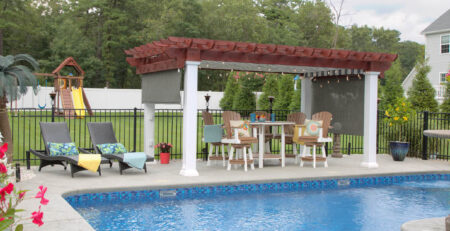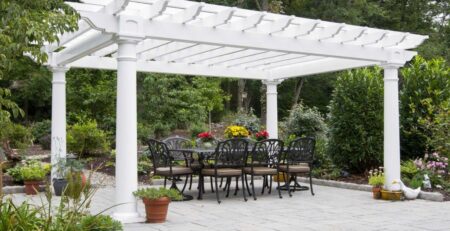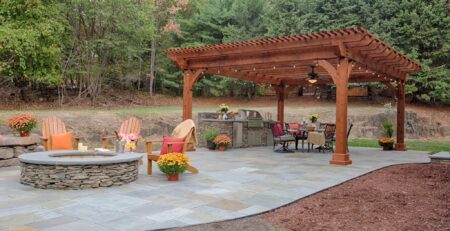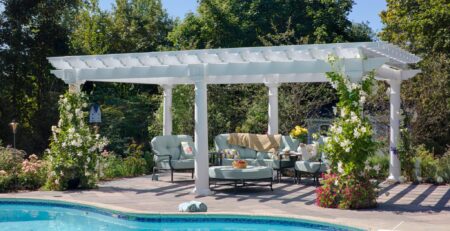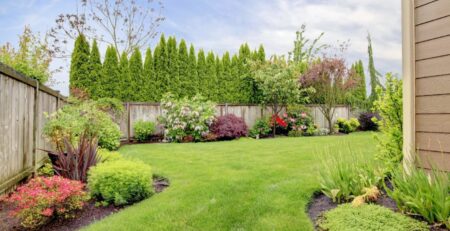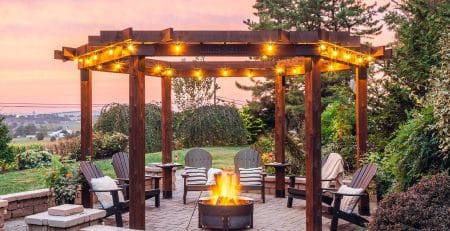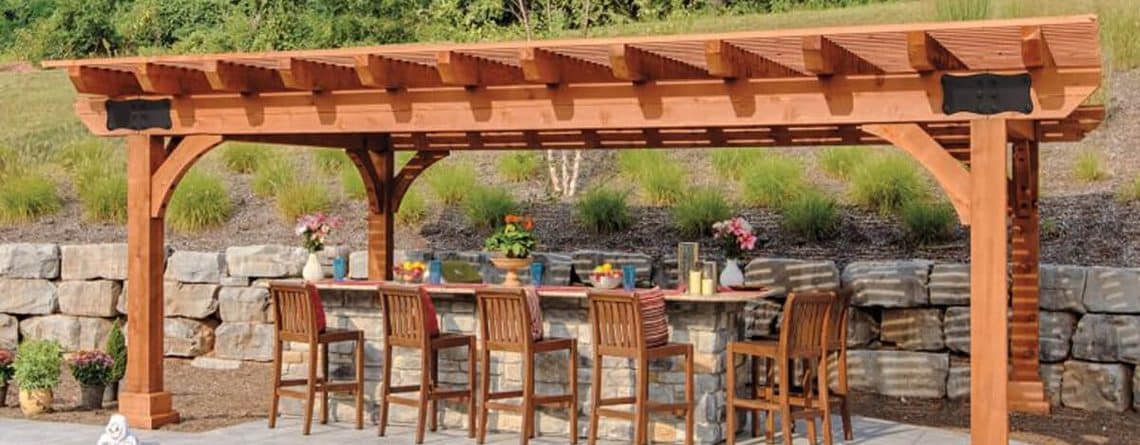
Every homeowner searching for a pergola size guide is really asking one question: What size won’t wreck the yard I already love? A pergola too small ends up looking like a glorified canopy, an afterthought floating in the yard instead of anchoring it. A pergola too large crowds the patio, throws off the lines of the house, and turns a real investment into a mistake you can’t unsee. Finding the perfect one? That’s why we’re here.
Country Lane Gazebos builds pergolas in sizes ranging from 8×8 feet to 16×32 feet, in the Vista, Hollander, Traditional, Artisan, Santa Fe, and Kingston styles, so the size you choose actually fits your yard, your home, and how you plan to use the space.
Key Takeaways:
- Standard pergola sizes at Country Lane range from 8×8 feet up to 20×40 feet, depending on the style
- The right size depends on how you’ll use the space: a 10×10 suits an intimate nook, a 12×16 fits outdoor dining, and a 16×22 works for entertaining
- Leave at least 3 feet of clear walking space around the posts, since roof overhang extends beyond the footprint
- Size should match the scale of your home, and custom sizing is available for unique footprints or an exact Golden Ratio proportion
- Use the 3D Builder Tool to configure and preview your exact size before ordering
Standard Pergola Sizes and Dimensions Explained
Most pergola brands sell one size and call it flexible. Country Lane builds eight distinct pergola styles, and each one carries its own standard size range, so the dimensions shift with the roofline and post detail you choose, not just the footprint you have.
Here’s what standard pergola sizes and dimensions look like, starting at 8×8 feet and reaching 20×40 feet with the largest style:
| Pergola Style | Standard Size Range | Materials |
| Arcadian | 8×8 to 14×28 ft | Vinyl |
| Hollander | 8×8 to 16×32 ft | Wood, Vinyl |
| Artisan | 8×8 to 16×32 ft | Wood, Vinyl |
| Traditional | 8×10 to 16×32 ft | Wood, Vinyl |
| Ring of Fire | 12 to 20 ft | Wood, Vinyl |
| Santa Fe | 10×10 to 18×36 ft | Wood, Vinyl |
| Kingston | 10×10 to 18×40 ft | Wood |
| Vista | 10×10 to 20×40 ft | Wood, Vinyl |
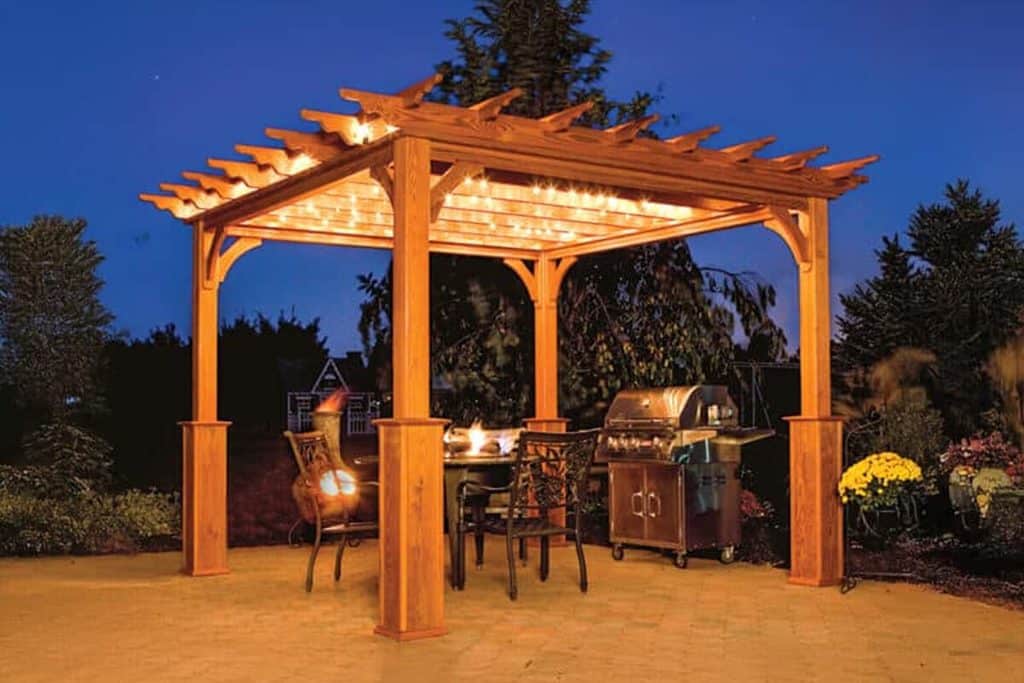
What Size Pergola Do You Need for Your Backyard?
Knowing the standard range doesn’t tell you which size actually works for your yard. The right size comes down to how much space you have and what you plan to do under it, like a quiet reading nook, a dinner table for six, or a full outdoor kitchen setup. Here’s how three real Country Lane pergola styles match up to three common backyard scenarios.
Small Backyards and Intimate Nooks: 10×10 Traditional Pergolas
A 10×10 Traditional pergola fits a compact patio without overwhelming the surrounding yard, making it the standard pergola size for smaller lots and cozy corners.
Country Lane builds the Traditional Pergola in solid wood or maintenance-free vinyl, so the frame holds its shape over a reading chair, a small bistro set, or a hammock without dominating the space above it.
For a backyard where every square foot counts, this size gives you defined shade without closing in the rest of the yard.
Mid-Size Backyards and Outdoor Dining Spaces: 12×16 Hollander Pergolas
Seating four to six people for dinner takes more overhead coverage than a reading nook, which is where a 12×16 Hollander pergola earns its keep. The Hollander Pergola is Country Lane’s most popular style, built with substantial timber framing that leaves enough clear span for a full outdoor dining table and the chairs pulled out around it.
At this size, the pergola reads as a real extension of the house rather than a small accent piece dropped near the patio door.
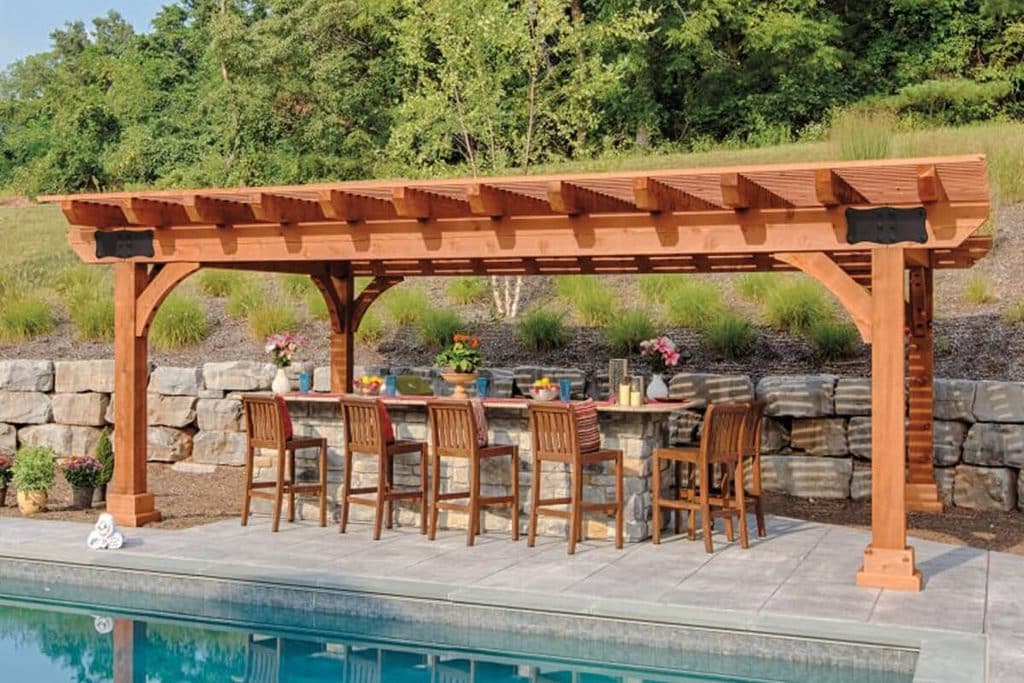
Large Backyards and Outdoor Entertaining Spaces – 16×22 Kingston Pergolas
Once an outdoor kitchen, a grill island, or a full entertaining setup enters the plan, a 16×22 Kingston pergola gives the structure enough presence to match. Built entirely in cedar, the Kingston Pergola carries the boldest roofline in Country Lane’s lineup, which holds its own against a large patio instead of looking undersized next to it.
This is the size and style homeowners reach for when the backyard functions as a second living room, not just a place to walk through on the way to the grill.
How Much Space Do You Need for Your Pergola’s Footprint?
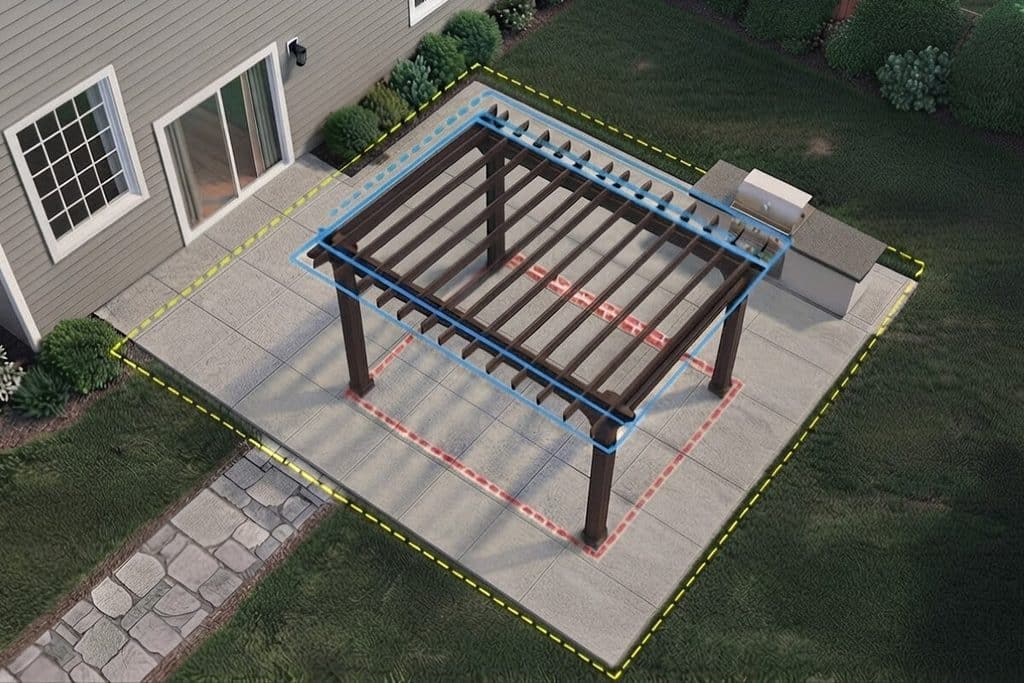
The post footprint printed on a spec sheet only tells part of the story. Before locking in a size, measure the existing patio or deck the pergola will sit on, then note where doors, walkways, and grills already claim space, since none of that goes away once the structure goes up.
A pergola’s real footprint includes the posts, the walking room around them, and the roofline overhead, which is usually wider than the frame below it. Getting this measurement right up front prevents the common mistake of ordering a size that technically fits the slab but crowds everything around it.
Pergola Clearance and Overhang Guidelines
Leave a minimum of 3 feet of clear walking space on every side of the pergola that people will actually use, like a path to the grill or room to pull out a chair. This clearance applies to the post placement, not the roofline above it, since the roof overhang extends past the posts on every style Country Lane builds.
Because that overhang varies by style and size, run your exact dimensions through the 3D Builder before finalizing a patio layout, so the footprint you plan around matches the structure you actually order.
Sizing a Pergola to Fit Your Home’s Architecture and Style
A pergola that ignores the scale of the house next to it reads as an afterthought, regardless of the craftsmanship behind it.
A low-slung ranch calls for a different profile than a two-story colonial with tall sightlines from the back windows, and a wide backyard shouldn’t default to the biggest style just because there’s room for it. Beyond the standard 8×8 through 20×40 range, Country Lane builds custom pergola sizes for unique footprints, tight property lines, and details a stock dimension can’t cover, like matching a wraparound porch or fitting around existing landscaping.
Homeowners chasing a polished, estate-style look for a custom build often land on the Artisan Pergola, since upgraded detailing is already part of that line. Either way, custom sizing means the pergola gets built around your property, not the other way around.
How Big Should a Pergola Be Using the Golden Ratio
For a more exact approach to proportion, some homeowners size their pergola using the Golden Ratio, a roughly 1:1.618 relationship between width and length that the eye reads as naturally balanced. Apply it to a starting width and the ideal length follows:
- 8 ft wide → about 13 ft long
- 10 ft wide → about 16 ft long
- 12 ft wide → about 19 ft long
Country Lane’s standard sizes won’t always land on that exact number, but custom sizing closes the gap so the proportion works out, not just the footprint.
Design Your Ideal Pergola Size with Our 3D Builder Tool
Every backyard has a size that actually works, one that fits how you’ll use the space, the patio it sits on, and the house it sits next to. Once that number feels right on paper, the only way to know for sure is to see it.
Country Lane’s 3D Builder Tool lets you plug in your exact dimensions, choose a style like the Hollander or Kingston, and configure the pergola before you buy, so you can walk away from your screen already knowing what will show up in your yard.
Schedule a consultation or reach out to a Country Lane specialist if you’d rather talk through the numbers first.Gazebo vs. Pergola vs. Pavilion: Comparing Backyard Shade Structures
Gazebo, pergola, and pavilion rank among the most searched backyard shade structures, yet people lump the three into one generic category far too often.
Pergola Size Guide FAQs
Can I put a 12′ x 16′ pergola on a 12′ x 16′ patio, or do I need extra space around it?
A 12×16 patio works as the post footprint, but you’ll want the patio itself larger than that, since Country Lane recommends at least 3 feet of clear walking space beyond the posts on every usable side. Without that buffer, chairs and foot traffic end up crowding the edges of the structure.
I have a large L-shaped patio; can I use two pergolas together to cover the whole space?
Yes, pairing two smaller pergolas often works better on an L-shaped patio than forcing one oversized structure to cover both wings. Size each pergola to the leg of the patio it covers, then use our 3D Builder or a design consultation to make sure the two proportions read as one cohesive layout rather than two mismatched pieces.
Does the pergola size I choose affect whether I need a building permit?
Permit requirements depend on your local building codes, and size is often one factor that determines whether a permit applies, alongside placement and whether the structure attaches to your house. Check with your local building department before ordering, since every municipality sets its own threshold.